Bordered Decks
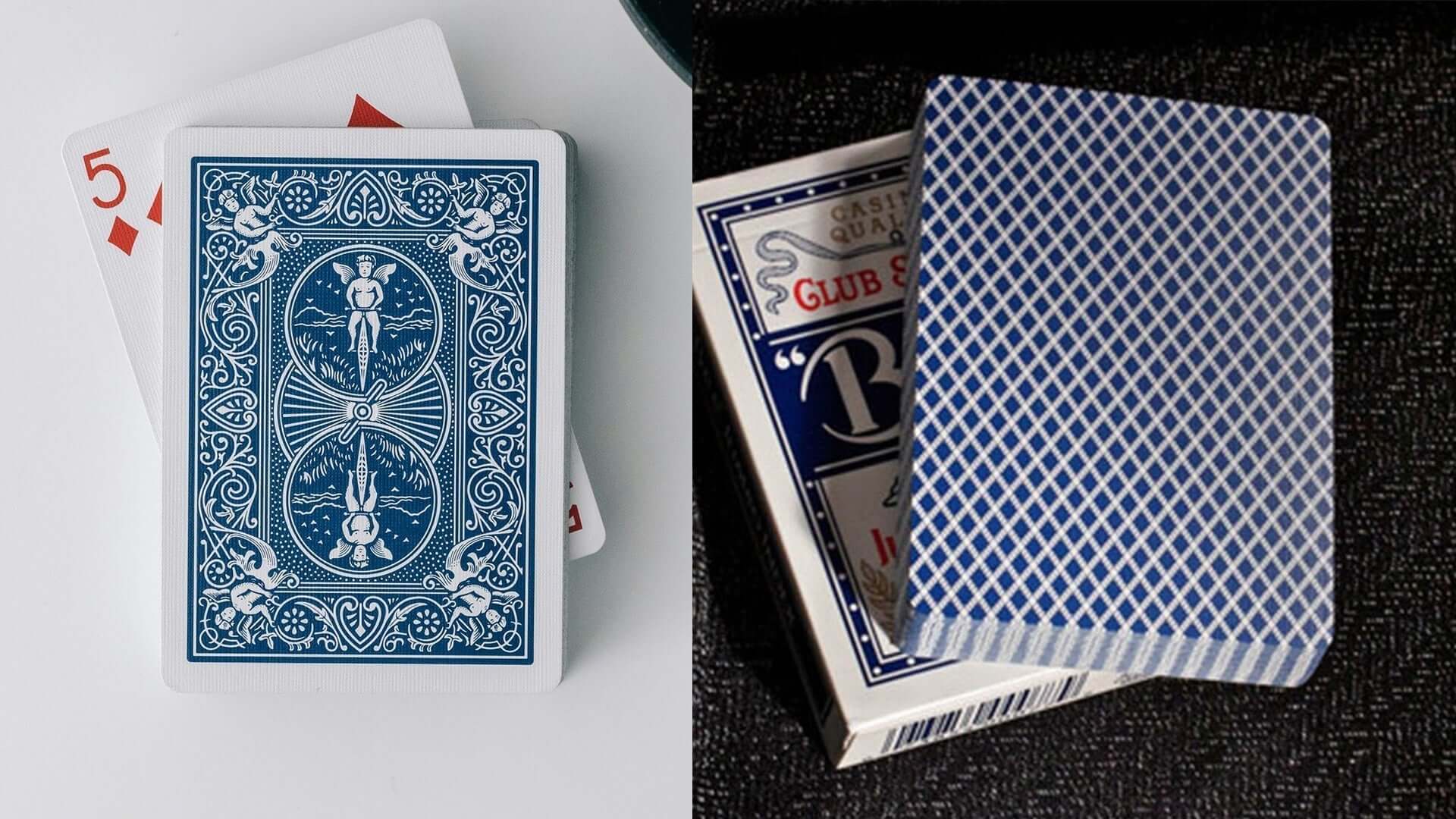
Bordered decks are playing cards with a clearly defined edge, often in white or a contrasting color, that frames the back design of the card. This border visually separates the back design from the edges, providing structure and clarity to each card’s appearance. Bordered decks are the most common type of playing cards and are widely used in magic, casual card games, and some cardistry.
Pros:
- ✅ Concealment: Excellent for hiding sleights like double lifts or reversed cards.
- ✅ Clarity: Easier for spectators to follow routines, as the defined edges create visual distinction between cards.
- ✅ Versatility: Suitable for a variety of uses, including magic, card games, and cardistry.
Cons:
- ❌ Choppy Aesthetics: Fans and spreads can look uneven if your skill isn’t refined.
- ❌ Not Ideal for Gambling Demonstrations: Borders make sleights like false deals or passes harder to hide.
- ❌ Appearance of Dirt: White borders can become dirty with extended use.
Borderless Decks
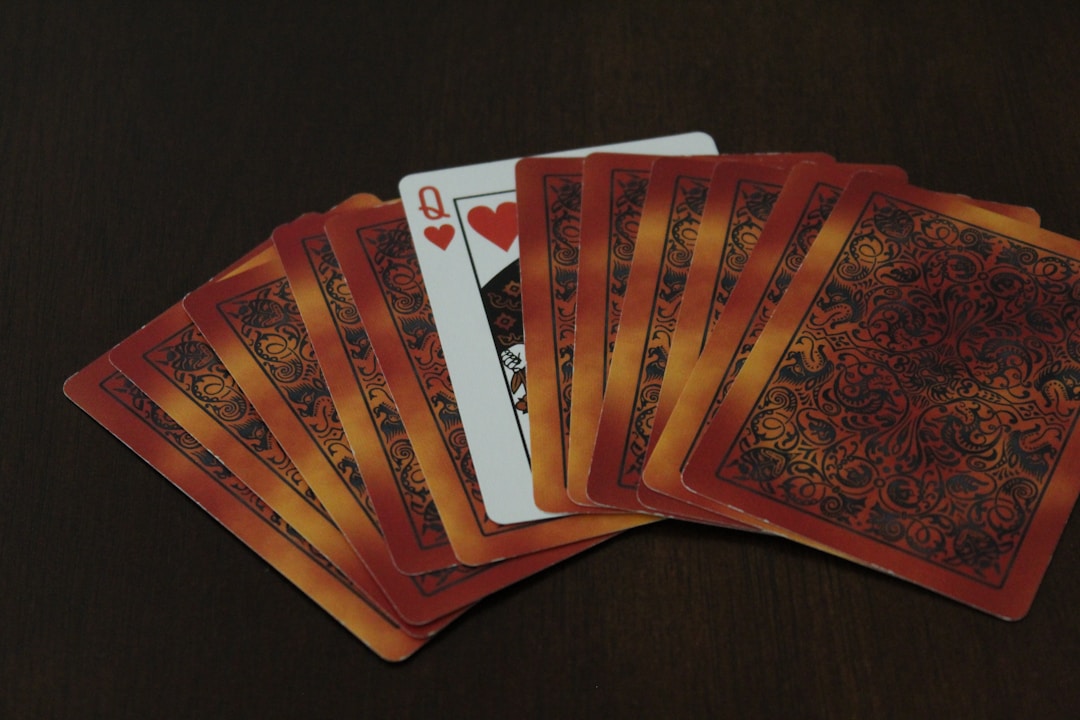
Borderless decks are playing cards with back designs that extend seamlessly to the edges of each card. Unlike bordered decks, they lack a defined frame around the back, creating a continuous, uninterrupted pattern. This design enhances the visual appeal of fans, spreads, and flourishes, making borderless decks a favorite among cardists and gambling demonstrators.
Pros:
- ✅ Visual Spreads: Borderless designs can create visually stunning displays when cards are spread out.
- ✅ Hides Gambling Sleights: Patterns that extend to the edges make sleights like second and bottom deals more deceptive.
- ✅ Authenticity: Often associated with classic casino-style playing cards.
Cons:
- ❌ Reversing Cards: Makes hiding sleights like double lifts or secretly reversed cards more challenging.
- ❌ Wear and Tear: Edge scuffs and nicks are slightly more noticeable due to the lack of a border.
- ❌ Less Clarity: The lack of defined borders makes spectating performances more difficult to follow at a distance.
Choosing the Right Deck for You
When deciding between bordered and borderless cards, consider your primary use:
For Magic: Bordered decks are usually preferred. Certain card tricks require you to secretly reverse cards in the deck — these reversed cards are much easier to hide with a border.
For Cardistry: Both work. Some borderless decks have a continuous design that looks incredible spread out. Bordered designs visually frame each card/packet in a clean way that accentuates movement.
For Gambling Demonstrations: Borderless cards are typically preferred for their ability to conceal false deals and other gambling sleights.
For Collecting: Both styles offer beautiful options. Choose based on personal preference and intended display or use.
Final Thoughts
Any serious magician, cardist, or collector should have both bordered and borderless cards in their collection. Hopefully this helps you decide which deck to pick up next!